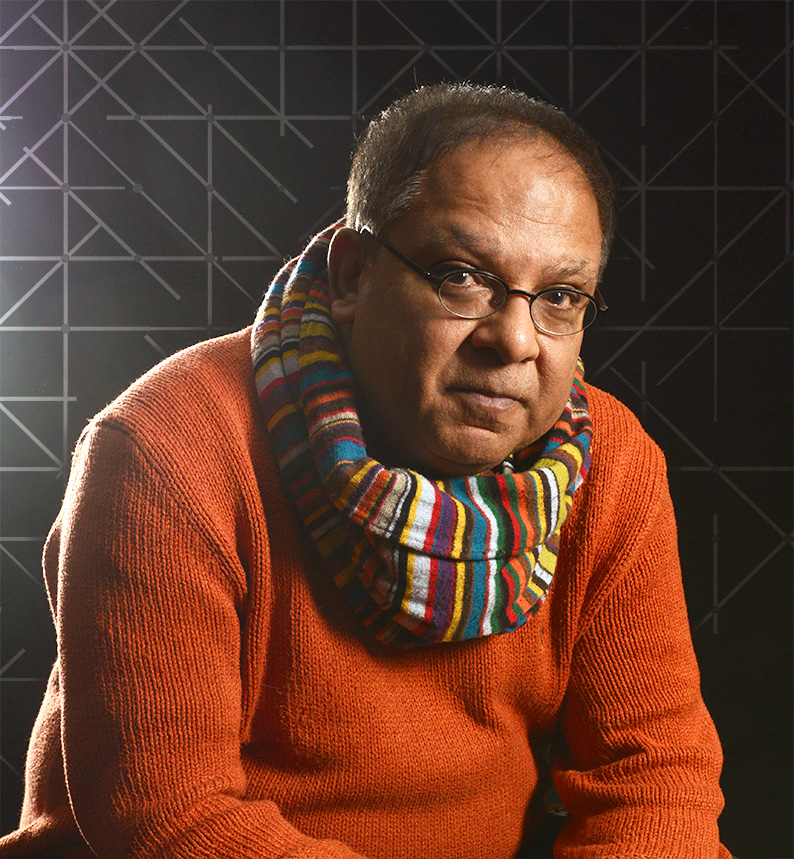
Sir Anthony Hopkins, an actor from Port Talbot, Wales—a town boasting a population of just 31,550—has been honoured with two Academy Awards, four BAFTAs, two Primetime Emmy Awards, a Laurence Olivier Award, the Cecil B. DeMille Award, the BAFTA Fellowship for Lifetime Achievement, and, crowning it all, a knighthood for his services to drama.
In a recent interview with the BBC, he admitted, “I was not bright at school.” The interviewer was perplexed. “But you read Dickens, encyclopaedias your father bought home; you studied astrology; played the piano and painted. Clearly, you were very bright.”
Sir Anthony riposted, “It was 1955. I was seventeen. My father received my school report, which he read out to me: ‘Anthony seems to be well below the educational standard of this school.’ He threw my report into the fireplace and lashed out at me. ‘Can’t you concentrate? We’re trying so hard to help you.’ Being seventeen, I stepped back and pointed at him. ‘You wait. I’ll show you.’”
“Six months later, I won a scholarship to the Royal Welsh College of Music & Drama. I had never done any acting before.”
The interviewer observed him for a moment. “What motivated you?”
“I was so tired of being labelled a failure. It was the anger within me—the need to prove everyone wrong.”
As I ate up the interview, I told myself, That’s me.
Except I didn’t have the courage, nor the conviction, to rebel at seventeen. It took me until I was thirty-seven to dispose of the doubts within me and carve a path to success and happiness. I finally began to listen to my own voice.
In England, my overpowering East Indian mother—highly successful financially—pushed me into science at school to give me easy access to Oxford or Cambridge. I loved history, geography and English language. I failed my high school exams. In my mother’s eyes, if I couldn’t pass into university, then I would take up a profession. She chose accounting. I couldn’t add.
I was kicked out of one firm after another, failing my exams each time. Sir Anthony’s words rang true: “I was tired of being a failure.”
I buckled down to self-study and eventually passed my exams. To escape my domineering mother, I emigrated to the other side of the world—Calgary, Canada.
But there, it was still the same. Recruited from England on a three-year contract, I was asked to leave within eighteen months for failing to meet the standards and behaviour expected of a practising public accountant. My mother still called collect from England. “You’re a loser. Just like your dad,” she said—whom she had divorced when I was five.
Fortunately, a Jewish real-estate mogul—a client I had served during my term—took a shine to me and welcomed me in as his controller. There was no upward movement. I would be stuck in that position for the rest of my life, if I chose to stay.
One midnight, still working in the office, I had an epiphany. I asked myself what I was doing there. Was this the life I was going to live forever?
The next morning, I handed in my notice.
“But you can’t leave. We need you.”
“All right,” I replied. “I’ll convert to a consultant at a fee equivalent to my wages. You’ll benefit—you won’t have to pay for holidays, a pension or other perks. However, my contract won’t be based on hours worked, but on piecework.”
By then, I had streamlined the accounting, training a bookkeeper at work. I discovered I could complete everything my boss required in half the time. As an independent contractor, I saved significantly on taxes.
Business partners of my boss asked me to consult for them. As I no longer needed the money or the security of regular employment, I doubled my rates—always being paid what I asked for, and always for piecework rather than hourly labour. I could hive off the accounting portion to bookkeepers I trusted and use my creativity to run businesses more smoothly: restructuring to lower taxes, secure better financing and reduce liabilities. My results yielded ten times my fees for my clients. I had found my niche.
Still single, I was never satisfied with my achievements. I treated everything as a stepping stone. My motto was always, “What’s next?”
I began to understand why I had once been regarded as a failure. Never had I worked at something I truly loved. As a result, I was mediocre in my mother’s chosen profession for me. With that handicap, I could never compete with colleagues who were naturally more capable in this bread-and-butter field. I could never excel.
For the past six years, I have written stories—of myself, of travel, and of motivation.
I have discovered that the measure of success for most of working humanity is orthodoxy. The more unorthodox you are, the more you fail. Yet these failures are merely experiments, as scientists perform, until they strike upon the correct formula. Then they are deemed a success overnight. Fellow workers judge each failed experiment in isolation, assessing you solely by its outcome. They never see it as trial and error on the path towards a destined goal.
Sir Anthony Hopkins concluded his interview by saying, “Each day I wake up, I realise I’m alive, wondering what new project I’ll be presented with today.”
I, too, wake each morning with that same sense of expectation.