What was I thinking?
I had got myself lumbered, training as an accountant at £600 a year ($1,200), with two weeks’ unpaid study leave to pass my exams. I was 18 years old, a high school failure, scraping into a CPA programme by the skin of my teeth just before its entry requirements changed.
Still living at home, I was pampered with a monthly allowance greater than my current salary. I argued with my mum and declared I was moving out—then realised I had nowhere to go.
A Pakistani widow in her forties, with two sons in their twenties, took me in. From a spacious, well-furnished room at home, I was relegated to a space that barely fit a single bed, with no wardrobe for my clothes. And it cost me £10 a month—more than a quarter of my after-tax income. Luckily, the family treated me as one of their own. Though not part of our agreement, I was always fed with her cooking.
Soon, it became clear that £40 a month from my employer, after deductions, would not be enough. I had to find a part-time job.
“Bookkeeper Wanted. Apply in Person.” The address was up on Castle Hill, half an hour away if I rode my bike—a lady’s model, with a basket at the front to hold my accounting paraphernalia.
A townhouse in the middle of a row. On knocking, an elderly East Indian man opened the door. He looked as though he’d stepped out of a charity advert for Biafra—the latest war in which starving, emaciated African children cried out to be fed. The man gave me a severe look of disapproval. He couldn’t have been more than 5 feet tall. Very dark-skinned.
“My name is Mr Joshi. What is yours?”
On answering, and until the end of our five-year relationship (until I qualified and emigrated to Canada), he insisted on addressing me as “Mister”. At first, it was by my surname. As we grew closer, it was by my first name—but never once did he miss the “Mister”.
Mr Joshi led me through a door to the basement. It was musty and filled with boxes, stacked one atop the other. Two tiny windows with metal bars across them barely let in any light. In one corner stood a fold-up baize card table, with two fold-up chairs on either side. An Anglepoise lamp stood beside the table.
“My brothers and I sell wholesale costume jewellery. We need someone to do our bookkeeping. What do you charge?”
Expecting an East Indian to haggle, I quoted a higher hourly rate. Mr Joshi accepted without a quibble.
For the next two hours, I worked through immaculately kept files of bank statements, invoices and expenses. No accounting had been done since the business had started. Mr Joshi sat in the chair opposite, arms crossed. Not a word was spoken during that time.
I arrived once a week in the evening. He would escort me to the basement and watch over me until my work was done.
It took a month before we conversed. Sales were increasing. There was adequate cash in the bank.
One evening, Mr J opened his sample case to show me his goods—everything from earrings to necklaces to bangles.
“I was a night security guard before I retired. A friend of ours in India manufactures costume jewellery and sent us samples to sell. The price and quality were right. My brother, also retired, joined in.”
I couldn’t understand how this severe man could sell costume jewellery. The answer came when I met his brother.
Rotund as a Buddha, with a large, kindly, smiling face and soft-spoken, it was the brother who did the selling. Over the next five years, the business thrived and expanded across the country.
Mr Joshi was Hindu. His wife was an impressive cook. Down in the basement, I smelt the food I remembered from Africa. One evening, Mr J invited me to supper.
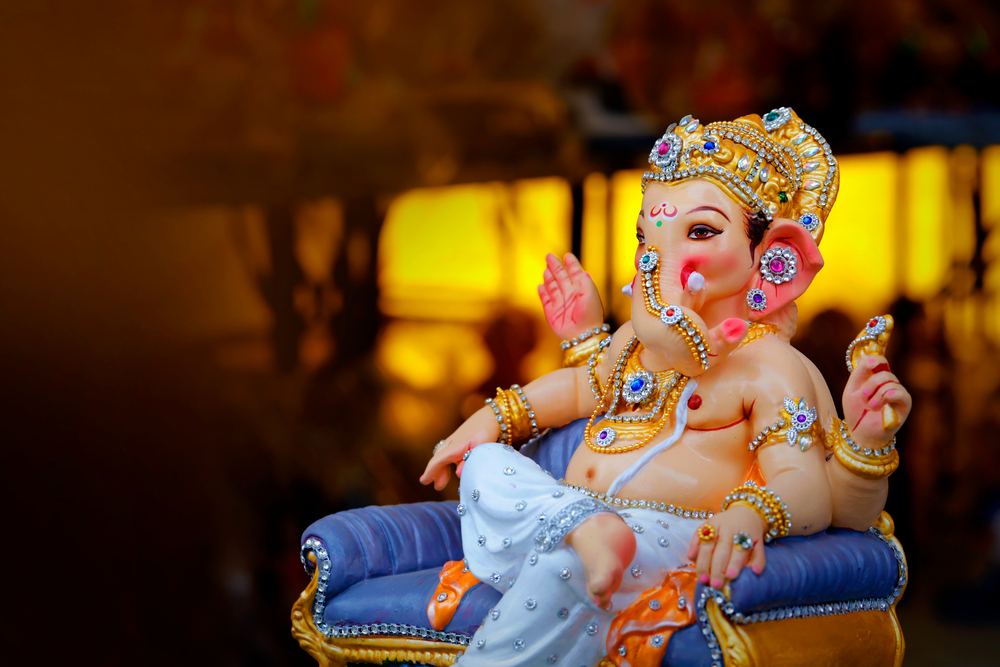
Upstairs, a large room was furnished like a palace. A gilt-framed picture of Ganesh, the Hindu deity with the elephant head and human body, dominated the sparkling white room. Half a dozen cross-legged family members sat on the floor, surrounding a large tablecloth covered in steaming, aromatic food.
As I sat beside Mr J, his wife handed me a plate and asked if I needed cutlery. Being East Indian myself, I had no trouble using my fingers like the rest of them.
Boy, did the food come.
Hot chapatis slathered with ghee (clarified butter), mung, rice, vegetarian samosas—a dozen other dishes followed. Dessert included jalebis: deep-fried gram-flour pretzels soaked in a syrup of sugar, cardamom and saffron, neon-orange in colour. There were ladoos too—soft balls of Indian sweets made with sugar, jaggery and shaved almonds.
For the first time, Mr Joshi let down his mask, smiling and joking with his brother.Having not spoken the language in a decade, I was surprised I could understand every word.
Who would have thought such a family of men could be sellers of feminine goods like costume jewellery? That, forty years later, an accountant who couldn’t add, in a continent far, far away, would be lauding them in books selling like hot cakes?
Oh! The wonders of life.