My father died on 1 April 2012. Being an Ismaili Muslim, the community took charge of the entire ceremony at no cost. Discovering that my wife was Filipina, they kindly gave her a “cheat sheet” to memorise all the responses in Arabic for the funeral. What the burial committee did not know was that, having been away from all Ismaili contact for half a century, I too had forgotten the intricacies of a funeral.
Ever diligent, Laura learnt all her lines, carefully checking with me that her pronunciation was correct. I, on the other hand, never found the time to read the blessed sheet.
In Muslim culture, owing to the climate of the Middle East where Islam was born, burials take place within a matter of days.
My father’s funeral was held one afternoon at a brand-new, palatial Jamat Khana (mosque), set within its own grounds in Calgary. Having never attended this mosque before, we arrived an hour early to ensure we were on time.
Despite the short notice given to the congregation across Calgary, the place was packed — probably around two hundred people.
We were ushered into the main prayer hall, large enough to hold us easily. The women were separated from the men, positioned on either side of my father’s body. We all sat cross-legged on the floor.
I sat beside Laura on my side of the men’s section. Her responses were flawless. Unfortunately, as I had not learnt mine, I mumbled, vigorously bowing my head at every turn.
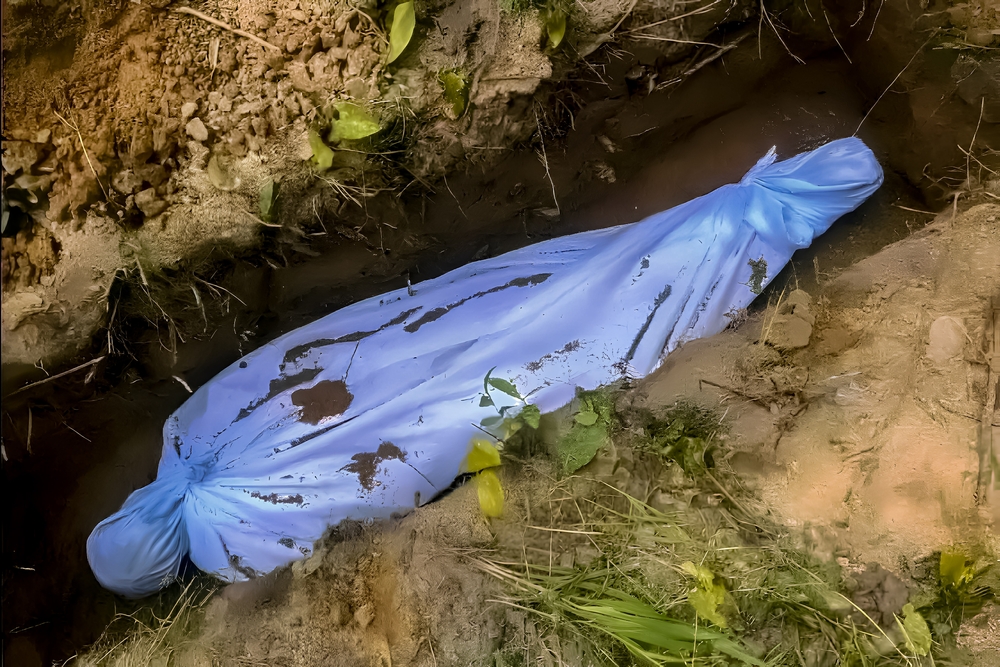
At the end of the ceremony, only the men were permitted to bury my father at a new Ismaili graveyard on the outskirts of town.
That evening, after we had returned home, several members of the congregation rang to congratulate me on my clear intonation and responses — especially so after such a long absence. No one mentioned my wife’s performance.
Last year, a dear old family friend passed away. When I was a bachelor newly arrived in Canada, Mrs J. had regularly invited me to her home, cooking the most delicious food from my childhood. Laura was unwell with flu, so I attended the funeral alone at yet another palatial Jamat Khana.
As I entered, a young man in his mid-twenties was volunteering — quite a sacrifice for a weekday morning. He welcomed me warmly and handed me a pamphlet explaining the ceremony. He thought I was Filipino.
I accepted the pamphlet in silence, not bothering to disabuse him of the notion.
My mind drifted back through sixty years of attending mosques across the world. My journey began at a very early age. When I was five, my mother divorced my father and took me with her to England. That was in 1960. We were among the first of our diaspora from East Africa. In 1970, following political purges, our community scattered across the globe. With the assistance of Pierre Trudeau, then Prime Minister of Canada, many arrived here with little more than a single suitcase per person.
As a small boy in Dar es Salaam, Tanzania, I remember clutching my father’s hand each evening as we walked along the palm-fringed harbour to our marble-clad mosque. Vast halls accommodated a thousand congregants. The floors were covered with rush mats; the air cooled by breezes drifting through filigreed, unglazed windows. Hymns, sung mellifluously by maids in silken saris, filled the space. Even a fidgety five-year-old was stilled by the peace and tranquillity.
Because my father worked for an airline, I returned to Africa during every school holiday, never realising how quickly it would all disappear. Over time, the congregation dwindled. On my final visit, only a dozen remained where once there had been thousands.
In England, faith took on a different shape. We lived in Maidenhead, thirty miles from London — which, at the time, might as well have been a thousand. My single mother struggled to make ends meet, yet she insisted on taking me, dressed in suit and tie, three times a year to the mosque off High Street Kensington on holy days. It was a narrow townhouse, three storeys high. The rooms were cramped, each holding a hundred people in spaces meant for fifty. People sat on the stairs, blocking the stairwell. It was a time to connect. I was always hot and sticky.
At twenty-four, I passed my accounting exams and emigrated to Calgary.
Once again, the Ismaili congregation began by renting a basement, then progressed to a small warehouse in the city’s industrial area. Now, fifty years later, it has built two mosques from scratch, their exteriors resembling palaces. To me, however, not all that glittered was gold. The materials were flashy, yet nothing like the marble of Africa. The simplicity of prayer and modest dress had long been forgotten. It felt less like devotion and more like a desire to impress — form over substance.
The volunteer watched me, perhaps sensing I was lost in thought, and wondered whether I needed help.
How could I ever explain what I had witnessed of our jamats — experiences he would never know? Or how it felt to be so kindly treated as an alien in my own spiritual home.
A fate worse than death.